Kategori
Blog baru.
Bagaimana Kipas Knalpot yang Senyap Dapat Diintegrasikan ke Dalam Desain HVAC Arsitektur Mewah?
September 02 , 2026Arsitektur mewah tidak lagi hanya didefinisikan oleh material mahal, fasad yang mengesankan, jendela besar, furnitur premium, atau pencahayaan yang canggih. Ruang mewah modern semakin dinilai berdasarkan kualitas pengalaman yang diberikannya. Suhu, kelembapan, kualitas udara dalam ruangan, kenyamanan akustik, kebersihan visual, dan keandalan sistem bangunan semuanya memengaruhi bagaimana penghuni mempersepsikan lingkungan kelas atas.
Di antara faktor-faktor tersebut, ventilasi adalah salah satu yang terpenting dan paling mudah diabaikan. Orang mengharapkan udara segar, kelembapan terkontrol, dan pembuangan panas yang efektif, tetapi mereka tidak ingin terus-menerus mendengar peralatan mekanis yang bertanggung jawab untuk memberikan manfaat tersebut. Sistem ventilasi yang berfungsi dengan baik tetapi menghasilkan kebisingan yang cukup mengganggu dapat mengurangi rasa nyaman dan kemewahan yang dirancang untuk diciptakan oleh bangunan mewah.
Inilah mengapa integrasi kipas ventilasi senyap menjadi pertimbangan penting dalam desain HVAC arsitektur modern. Tujuannya bukan sekadar membeli kipas dengan tingkat kebisingan rendah. Solusi ventilasi yang benar-benar senyap membutuhkan koordinasi antara kipas, motor, jalur aliran udara, saluran udara, struktur pemasangan, sistem kontrol, bahan bangunan, dan tata letak arsitektur.
Di gedung hunian mewah, hotel butik, klub pribadi, restoran premium, toko ritel kelas atas, kantor eksekutif, fasilitas kesehatan, dan lingkungan perawatan kesehatan yang canggih, sistem pembuangan udara seringkali perlu beroperasi di latar belakang tanpa menarik perhatian. Hasil terbaik dicapai ketika penghuni merasakan manfaat ventilasi tanpa secara sadar memperhatikan peralatan tersebut.
Bagi produsen seperti China Chungfo Fan, hal ini menciptakan peluang untuk mendekati desain kipas dari perspektif teknik dan arsitektur. Komponen ventilasi yang ringkas dapat menjadi bagian dari solusi HVAC yang lebih besar ketika perilaku akustik, kinerja aliran udara, dimensi fisik, opsi kontrol, dan keandalannya dipertimbangkan sejak awal proses desain bangunan.
Mengapa Kebisingan Penting di Ruang Arsitektur Mewah
Kebisingan memiliki dampak psikologis yang berbeda di lingkungan mewah dibandingkan di ruang industri atau utilitas biasa. Di pabrik, gudang, bengkel, atau ruang mesin, kebisingan peralatan mungkin dapat diterima sebagai bagian dari lingkungan. Namun, di kamar hotel mewah atau tempat tinggal pribadi, bahkan suara kontinu yang relatif kecil pun dapat menjadi terasa.
Arsitektur mewah seringkali bertujuan untuk menciptakan perasaan tenang. Material alami, pencahayaan lembut, tekstur yang dipilih dengan cermat, peralatan yang tersembunyi, dan proporsi ruang yang terkontrol digunakan untuk menciptakan suasana di mana penghuni dapat bersantai. Kipas angin yang menghasilkan suara bernada terus-menerus dapat mengganggu suasana tersebut.
Tantangan menjadi lebih signifikan karena kipas ventilasi dapat beroperasi dalam waktu lama. Semburan suara singkat mungkin dapat diterima, tetapi pengoperasian terus-menerus menciptakan persepsi yang berbeda. Pendengaran manusia sangat sensitif terhadap suara nada yang berulang, terutama ketika lingkungan sekitar tenang.
Oleh karena itu, kebisingan kipas tidak boleh dianggap sebagai spesifikasi yang terisolasi. Tingkat suara yang dihasilkan oleh kipas hanyalah satu bagian dari hasil akustik. Turbulensi udara, getaran motor, perilaku bantalan, permukaan pemasangan, resonansi saluran, desain kisi-kisi, dan kehilangan tekanan semuanya dapat memengaruhi apa yang akhirnya didengar oleh penghuni.
Kipas angin dengan tingkat kebisingan laboratorium yang dapat diterima masih dapat menjadi berisik setelah pemasangan jika sistem saluran udaranya dirancang dengan buruk. Sebaliknya, kipas angin yang dipilih dengan baik dikombinasikan dengan saluran udara yang sesuai dan isolasi getaran dapat memberikan hasil yang jauh lebih tenang di dunia nyata.
Perbedaan ini sangat penting untuk sistem HVAC arsitektur karena kipas sering terhubung ke jaringan yang lebih besar. Sistem aliran udara lengkap menentukan seberapa keras kipas harus bekerja. Jika sistem menciptakan hambatan yang berlebihan, kipas mungkin perlu beroperasi pada kecepatan yang lebih tinggi. Kecepatan yang lebih tinggi dapat meningkatkan turbulensi, getaran, kebisingan motor, dan kebisingan aerodinamis.
Oleh karena itu, prinsip pertama ventilasi yang tenang sangat sederhana. Jangan mendesain kipas secara terpisah dari sistem aliran udara.
Performa Senyap Dimulai dengan Pemilihan Kipas yang Tepat
Langkah terpenting dalam menciptakan sistem pembuangan udara yang senyap adalah memilih kipas yang sesuai dengan kondisi pengoperasian sebenarnya. Kesalahan umum adalah memilih kipas hanya berdasarkan aliran udara maksimum.
Aliran udara maksimum berguna untuk membandingkan produk, tetapi tidak menggambarkan bagaimana kipas akan bekerja setelah pemasangan. Kipas yang terhubung ke sistem saluran udara yang sempit mungkin menghasilkan aliran udara yang jauh lebih rendah daripada yang ditunjukkan oleh peringkat aliran udara bebasnya. Jika aliran udara yang dibutuhkan tidak tercapai, sistem dapat mengkompensasi dengan meningkatkan kecepatan kipas atau waktu pengoperasian.
Proses seleksi yang lebih baik mempertimbangkan aliran udara, tekanan statis, tegangan operasi, kecepatan, tingkat kebisingan, dimensi, sistem bantalan, desain motor, perkiraan jam operasi, kondisi suhu, dan persyaratan kontrol.
Untuk peralatan arsitektur yang ringkas, kipas aksial DC dapat bermanfaat ketika ruang terbatas dan aplikasi membutuhkan pergerakan aliran udara langsung melalui jalur ventilasi yang relatif terbuka. Struktur kipas aksial dapat memberikan solusi yang ringkas sekaligus mempertahankan kinerja aliran udara yang bermanfaat.
Namun, tidak setiap aplikasi ventilasi harus menggunakan konfigurasi aksial. Ketika sistem membutuhkan tekanan yang lebih tinggi atau memiliki pengaturan aliran udara yang kompleks, struktur sentrifugal mungkin lebih tepat. Oleh karena itu, kipas harus dipilih sesuai dengan resistansi sistem, bukan hanya berdasarkan kategori produk saja.
Hubungan antara aliran udara dan tekanan sangat penting. Kipas tidak akan beroperasi pada aliran udara maksimumnya setelah terhubung ke saluran udara. Titik operasi sebenarnya ditentukan oleh perpotongan kurva kinerja kipas dan kurva hambatan sistem.
Dalam proyek arsitektur mewah, para insinyur harus mengidentifikasi hambatan sistem yang diharapkan sebelum menentukan kipas angin yang tepat. Ini termasuk panjang saluran, siku, filter, kisi-kisi, peredam, peredam suara, transisi, dan komponen lainnya. Setelah kebutuhan tekanan aktual diketahui, kipas angin dapat dipilih untuk menghasilkan aliran udara yang dibutuhkan tanpa kecepatan yang berlebihan.
Mengapa Kecepatan Lebih Rendah Dapat Meningkatkan Kenyamanan Akustik
Kecepatan kipas adalah salah satu variabel terpenting yang memengaruhi kebisingan. Dalam banyak aplikasi, peningkatan kecepatan dapat secara signifikan meningkatkan kebisingan aerodinamis. Oleh karena itu, sistem yang menggunakan kipas dengan kecepatan terlalu tinggi dapat menimbulkan masalah akustik meskipun kipas itu sendiri secara teknis mampu beroperasi dengan tenang.
Pendekatan yang lebih baik adalah memilih ukuran kipas dan titik operasi yang sesuai sehingga aliran udara yang dibutuhkan dapat dihasilkan pada kecepatan putaran yang wajar.
Di sinilah kipas kompak dan kontrol motor yang disesuaikan dapat menjadi berharga. Alih-alih beroperasi terus menerus pada output maksimum, sistem ventilasi dapat menggunakan kontrol kecepatan variabel untuk menyesuaikan kinerja kipas dengan permintaan aktual.
Sebagai contoh, kamar mandi di hunian mewah mungkin membutuhkan ventilasi yang lebih kuat saat mandi tetapi aliran udara yang jauh lebih sedikit setelahnya. Kipas yang beroperasi terus-menerus dapat berjalan pada kecepatan lebih rendah dalam kondisi normal dan meningkatkan kecepatan sementara ketika kelembapan meningkat.
Pendekatan ini memberikan beberapa manfaat. Pendekatan ini dapat mengurangi kebisingan yang tidak perlu, mengurangi konsumsi energi, memperpanjang umur peralatan, dan memberikan kontrol yang lebih baik terhadap kondisi dalam ruangan.
Kontrol PWM juga dapat memberikan manajemen kecepatan yang lebih presisi pada sistem yang mendukung arsitektur listrik yang dibutuhkan. Dengan menyesuaikan kecepatan kipas sesuai dengan kebutuhan ventilasi aktual, sistem HVAC tidak perlu beroperasi pada kapasitas maksimum setiap saat.
Hasilnya adalah sistem ventilasi yang lebih cerdas dan hampir tidak terlihat oleh penghuni.
Peran Desain Motor dan Bantalan
Motor merupakan sumber penting lain dari performa akustik. Kipas angin tidak hanya menghasilkan suara karena udara bergerak melalui bilah-bilahnya. Komponen listrik dan mekanik dapat berkontribusi pada profil suara secara keseluruhan.
Ketidakseimbangan motor, gesekan bantalan, pergerakan rotor, getaran struktural, dan toleransi manufaktur semuanya dapat memengaruhi perilaku kipas.
Motor tanpa sikat yang dirancang dengan baik dapat memberikan pengoperasian yang stabil dan kontrol kecepatan yang presisi. Pemilihan bantalan juga memengaruhi kinerja jangka panjang. Bantalan selongsong dan bantalan bola memiliki karakteristik yang berbeda, dan pilihan yang tepat bergantung pada lingkungan pemasangan, waktu pengoperasian yang diharapkan, suhu, orientasi, dan masa pakai yang dibutuhkan.
Pada peralatan berukuran kompak dengan ruang terbatas, produk blower kecil juga dapat memberikan solusi aliran udara yang bermanfaat. Kipas blower 5015, misalnya, termasuk dalam format kipas kompak yang dapat dipertimbangkan untuk aplikasi di mana jalur aliran udara membutuhkan pendekatan yang lebih terarah. Kesesuaiannya bergantung pada aliran udara dan tekanan yang dibutuhkan, bukan hanya ukuran fisiknya saja.
Prinsip yang sama berlaku untuk kipas blower 3010. Struktur blower yang sangat kompak dapat bermanfaat ketika peralatan ventilasi harus muat di ruang arsitektur yang sempit atau kompartemen peralatan yang tersembunyi. Namun, dimensi kecil tidak secara otomatis menjamin pengoperasian yang tenang. Motor, geometri impeler, persyaratan tekanan, struktur pemasangan, dan kecepatan operasi semuanya harus dievaluasi bersama-sama.
Untuk proyek mewah, tujuannya seharusnya adalah pengoperasian yang stabil dan dapat diprediksi, bukan sekadar biaya pembelian terendah.
Mengurangi Getaran Sebelum Menjadi Kebisingan
Getaran seringkali diabaikan selama perancangan HVAC. Para insinyur mungkin fokus pada tingkat tekanan suara sambil kurang memperhatikan bagaimana getaran mekanis merambat melalui struktur bangunan.
Kipas yang dipasang langsung pada panel logam kaku dapat mentransfer getaran ke struktur sekitarnya. Panel tersebut kemudian dapat bertindak sebagai pemancar suara. Di ruangan yang tenang, getaran ini dapat terasa meskipun kipas itu sendiri memiliki tingkat kebisingan yang relatif rendah.
Oleh karena itu, pemasangan yang tepat dapat membuat perbedaan besar.
Komponen pemasangan yang fleksibel, material isolasi getaran, komponen putar yang seimbang, perakitan yang akurat, dan dukungan struktural yang tepat dapat mengurangi transmisi getaran.
Permukaan pemasangan juga perlu dipertimbangkan. Panel logam tipis dapat memperkuat getaran secara berbeda dibandingkan dengan panel struktural yang tebal. Selubung di sekitarnya dapat menciptakan frekuensi resonansi yang membuat kecepatan operasi kipas tertentu lebih terasa.
Inilah mengapa rekayasa akustik harus dimulai dari antarmuka mekanis, bukan ditambahkan di akhir proyek.
Integrasi Arsitektur dan Ventilasi Tersembunyi
Salah satu ciri khas arsitektur mewah adalah kebersihan visual. Para desainer seringkali lebih menyukai peralatan yang tersembunyi, kisi-kisi terintegrasi, bukaan minimal, dan permukaan yang tidak terputus.
Oleh karena itu, sistem ventilasi harus menyatu dengan arsitektur dan bukan menjadi objek mekanis yang terlihat.
Fans can be positioned inside ceiling voids, service cavities, equipment compartments, bathroom ceiling systems, kitchen ventilation structures, furniture systems, or dedicated mechanical zones.
The challenge is to maintain sufficient airflow while preventing the fan from being obstructed.
A concealed fan still requires sufficient intake and discharge area. If the opening is too small, airflow resistance increases. If the grille is poorly designed, turbulence and noise may increase.
The ideal architectural solution balances three requirements. The fan should remain visually discreet, the airflow path should remain efficient, and maintenance access should remain practical.
This is particularly important in luxury residences where architectural finishes can be expensive and difficult to remove. A ventilation component that requires extensive ceiling demolition for routine maintenance can create a poor long term ownership experience.
Designing Maintenance Into The Architecture
A quiet exhaust fan is only successful if it remains quiet throughout its service life.
Dust accumulation, bearing wear, blade contamination, loose mounting components, and blocked airflow paths can gradually change fan performance. A system that was almost silent during commissioning may become more noticeable after years of operation.
Maintenance access should therefore be considered during the design stage.
Service panels can be hidden within architectural details. Removable grilles can provide access to filters and fan components. Modular fan assemblies can make replacement easier.
For high end buildings, maintenance should not require compromising the appearance of the interior. The service solution should be planned with the same attention given to lighting, plumbing, and electrical equipment.
This is one reason why fan manufacturers should communicate closely with HVAC engineers and architectural teams. Product dimensions, connector positions, mounting holes, airflow direction, replacement procedures, and service clearances can all influence the final building design.
Quiet Exhaust Fans In Luxury Bathrooms
Bathrooms are one of the clearest examples of why quiet exhaust ventilation matters.
A luxury bathroom may include stone surfaces, glass, wood, decorative metal, large mirrors, and other hard surfaces. These materials can reflect sound and create a more acoustically sensitive environment.
At the same time, bathrooms require effective humidity removal. Steam generated by showers and hot water can increase humidity rapidly. Without adequate exhaust, moisture may remain inside the room and contribute to condensation, odors, and long term material problems.
The ventilation system therefore has to remove humid air without becoming the dominant sound source.
A variable speed exhaust fan can provide a practical solution. During normal operation, the fan can run at a lower speed. When humidity increases, the control system can temporarily increase airflow.
This creates a ventilation pattern that follows actual demand instead of operating continuously at maximum capacity.
For luxury hotels and private residences, this type of control can significantly improve the perceived quality of the bathroom environment.
Luxury Kitchens Require Another Approach
Kitchen ventilation is more demanding because cooking generates heat, moisture, grease, odors, and particles.
A quiet fan cannot simply be selected based on sound level. It must also be capable of handling the required airflow and pressure conditions.
Duct length, bends, filters, dampers, and exhaust outlets can create substantial resistance. If the fan is undersized, airflow may be insufficient. If the fan is oversized and operated at unnecessarily high speed, noise may become excessive.
The design should therefore begin with the required airflow and pressure and then optimize the fan operating point.
In premium kitchens, the fan may also be separated physically from the occupied space. Placing the primary fan in a remote service location can reduce the amount of mechanical noise reaching the kitchen while maintaining effective air extraction.
This approach demonstrates an important architectural principle. Sometimes the quietest fan is not simply a quieter fan. It is a fan placed in a better location.
Quiet Ventilation In Luxury Hotels
Hotels present an even more complex challenge because the same HVAC principles must work across hundreds of rooms.
Guests have different expectations and different sensitivity to sound. A ventilation system that is acceptable to one guest may be noticeable to another.
Hotel rooms also have nighttime operating requirements. Guests may sleep while ventilation continues to operate.
Low speed continuous ventilation can therefore be useful when properly designed. Instead of allowing the fan to cycle between noisy high speed operation and complete shutdown, a controlled low speed mode can maintain background ventilation while minimizing acoustic disturbance.
Bathrooms can use humidity based demand control. Service rooms can use scheduled operation. Public areas can respond to occupancy. Conference rooms can respond to carbon dioxide or air quality sensors.
The overall objective is to make ventilation responsive without making the mechanical system noticeable.
Luxury Offices And Executive Spaces
Executive offices, boardrooms, private meeting rooms, and premium commercial interiors also require acoustic control.
A ventilation fan located near a conference room can interfere with speech intelligibility. A repetitive tonal noise can make conversations more difficult and can affect the perceived quality of meetings.
In these environments, fan selection should be coordinated with the acoustic requirements of the room.
The HVAC designer should consider not only the fan sound level but also duct breakout noise, grille noise, vibration transmission, and background sound.
A well designed system can locate fans away from occupied zones and use properly sized ductwork to distribute air quietly.
This is especially important in executive environments where confidentiality and concentration are important.
Wellness Spaces And Luxury Spas
Spas, wellness centers, meditation rooms, and premium fitness spaces place particularly high demands on acoustic comfort.
These environments are intentionally designed to reduce stress. Water features, natural materials, soft music, and controlled lighting are often used to create a peaceful atmosphere.
Ventilation must support humidity control and air quality without disturbing the experience.
In spa environments, humidity may be significantly higher than in ordinary commercial spaces. Fan materials, motor protection, bearing selection, and electrical protection should therefore be evaluated according to the actual environmental conditions.
Quiet operation remains important, but environmental reliability cannot be sacrificed for acoustic performance.
This is another reason why fan customization can be valuable. The ideal solution may require a specific voltage, airflow range, speed profile, material configuration, protection level, or control method.
The Importance Of Ductwork
Even the best quiet fan can become noisy when connected to poorly designed ductwork.
Small ducts increase air velocity. High velocity can generate turbulence and aerodynamic noise. Sharp elbows can create additional pressure loss. Poorly designed transitions can generate flow separation.
The solution is not necessarily to reduce fan speed alone. The entire airflow path should be optimized.
Duct diameter, length, bend radius, grille area, filter selection, and outlet geometry should be evaluated together.
A larger duct can sometimes allow the same airflow to move at a lower velocity, reducing turbulence. Smooth transitions can reduce pressure loss. Properly designed grilles can improve air distribution.
The fan and ductwork should therefore be treated as one system.
Acoustic Treatment And Fan Placement
Physical distance can also be an effective acoustic design tool.
If the fan can be located away from bedrooms, living rooms, meeting rooms, or relaxation areas, the perceived sound can be reduced.
Remote fan placement is particularly practical when the building includes accessible service zones. The fan can be positioned in a ceiling service cavity or mechanical room while the occupied room receives only the airflow through a properly designed duct system.
Acoustic lining and silencers can also be used where appropriate. However, these components create additional pressure resistance, so they must be included in the fan selection process.
Adding acoustic treatment after the fan has already been selected can cause unexpected airflow problems.
The best sequence is to calculate system resistance, select the fan, evaluate noise, and then optimize the complete system.
Smart Controls Make Quiet Ventilation More Effective
Modern luxury buildings increasingly rely on automation.
Ventilation can be connected to humidity sensors, temperature sensors, occupancy sensors, air quality sensors, timers, building management systems, and smart home platforms.
This creates opportunities for more precise fan operation.
Instead of running continuously at full speed, the system can respond to actual conditions.
A bathroom fan can increase speed when humidity rises. A storage room can operate according to a schedule. A private gym can increase ventilation when occupancy increases. A hotel room can maintain low background ventilation when occupied and adjust operation after the guest leaves.
This type of demand based control can improve both comfort and efficiency.
It also supports the architectural objective of invisibility. The ventilation system becomes something that reacts automatically rather than something occupants have to manage manually.
Energy Efficiency And Quiet Operation
Energy efficiency and acoustic comfort can support each other when the system is designed correctly.
Running a fan faster than necessary consumes additional power and may create unnecessary noise. A correctly sized fan operating near an efficient point can provide the required airflow without excessive energy use.
Variable speed operation can further reduce energy consumption during periods of low demand.
In large luxury buildings, even a small reduction in fan operating power can become meaningful over the lifetime of the building.
The energy strategy should therefore not focus only on the motor efficiency rating. It should consider the entire operating profile.
A fan that is efficient at maximum speed but spends most of its life operating at unnecessary capacity may not provide the best real world solution.
Customization For Architectural Projects
Standard fan products are useful for many applications, but luxury architectural projects often have unusual space and integration requirements.
A fan may need to fit into a specific cavity. The connector may need to face a particular direction. The mounting pattern may need to match an existing bracket. The operating voltage may need to match the building control system.
The fan may also require customized speed control, airflow direction, cable length, material, bearing configuration, or protection features.
This is where an experienced fan manufacturer can contribute beyond simply supplying a catalog product.
China Chungfo Fan can approach the application from the perspective of the actual equipment environment. Instead of treating the fan as an isolated component, the manufacturer can work with project requirements to identify the required airflow, pressure, voltage, dimensions, speed, noise target, and control method.
For architectural HVAC projects, this cooperation can shorten the gap between mechanical engineering requirements and the physical realities of the building.
Testing Before Mass Deployment
Luxury projects often involve significant investment in finishes and equipment. It is therefore advisable to validate ventilation performance before large scale installation.
Prototype testing can evaluate airflow, pressure, noise, vibration, temperature, and control behavior.
Acoustic testing can also identify unexpected tonal noise or structural vibration.
If a fan sounds acceptable in open air but becomes noisy after being installed inside an enclosure, the test environment can reveal the problem before the final architectural finishes are completed.
This is particularly valuable for hotel developments, premium residential towers, private clubs, medical facilities, and other projects where repeated modifications are expensive.
The goal is not simply to verify that the fan works. The goal is to verify that the complete ventilation system works as intended within the architectural environment.
Why Fan Manufacturers Should Understand Architecture
Traditional fan engineering often focuses on airflow, pressure, motor performance, temperature, and reliability.
Those specifications remain essential, but architectural applications require a broader perspective.
A fan may be technically excellent but difficult to integrate. It may provide high airflow but require too much space. It may be quiet in laboratory testing but create vibration after installation. It may be reliable but difficult to access for maintenance.
Architectural HVAC therefore requires collaboration between several disciplines.
Mechanical engineers determine airflow and pressure requirements. Electrical engineers determine power and control requirements. Acoustic engineers evaluate noise and vibration. Architects determine visual integration and spatial constraints. Facility managers consider maintenance and long term operation.
The fan manufacturer sits at the center of these requirements because the fan connects the electrical, mechanical, acoustic, and architectural systems.
A manufacturer capable of understanding these interactions can provide greater value than a supplier that only provides a specification sheet.
The Future Of Quiet Architectural Ventilation
The future of luxury HVAC design will likely move toward smaller, smarter, quieter, and more responsive ventilation systems.
Fans will increasingly operate according to actual environmental demand rather than fixed schedules.
Compact motors and improved control electronics will make variable speed operation more practical.
Sensors will provide more information about humidity, occupancy, air quality, and temperature.
Architects will increasingly expect ventilation components to disappear into the building rather than dominate the ceiling or wall.
At the same time, maintenance and reliability will remain critical. A luxury building cannot depend on a system that performs well only during the first few months of operation.
The most successful solutions will combine quiet mechanical design, efficient airflow, intelligent control, robust materials, reliable motors, and service friendly installation.
How To Specify A Quiet Exhaust Fan For A Luxury Project
The specification process should begin by identifying the actual ventilation requirement.
The design team should determine the required airflow, expected static pressure, operating schedule, available installation space, electrical supply, environmental conditions, acoustic target, control strategy, and maintenance requirements.
The next step is to identify the appropriate fan architecture.
An axial fan may be suitable for direct airflow applications with relatively low system resistance. A blower or centrifugal structure may be more suitable when the system requires higher pressure or directional airflow.
The fan should then be evaluated at its real operating point rather than only at free air conditions.
Noise should be evaluated together with vibration and installation conditions.
The mounting method should be designed before construction.
Ductwork should be sized to avoid unnecessary air velocity and pressure loss.
Control systems should be configured so that the fan operates according to actual demand.
Finally, prototype testing should be performed whenever the project has strict acoustic or architectural requirements.
This process creates a more predictable result and reduces the risk of expensive modifications after construction.
Conclusion
A quiet exhaust fan can be much more than a mechanical component inside a luxury building. When correctly integrated, it becomes part of the invisible infrastructure that supports comfort, air quality, humidity control, energy efficiency, and the overall feeling of refinement.
The key is to stop thinking about quietness as a single fan specification.
True acoustic performance depends on the interaction between the fan, motor, bearing, blade design, airflow, pressure, ductwork, mounting structure, architectural materials, controls, and maintenance strategy.
Luxury architecture demands this level of coordination because the mechanical system must deliver strong performance without becoming visually or acoustically dominant.
For bathrooms, kitchens, hotels, executive offices, spas, private residences, and premium commercial spaces, the right ventilation strategy can provide clean air and humidity control while remaining almost unnoticed.
China Chungfo Fan can support this approach by combining fan engineering with application based customization. From compact ventilation components to larger cooling and exhaust solutions, the right fan should be selected according to the complete system rather than one isolated specification.
The future of luxury HVAC is not simply about moving more air. It is about moving the right amount of air, at the right speed, through the right pathway, with the lowest practical acoustic and energy impact.
When ventilation becomes almost invisible, the architecture can speak for itself.
FAQ
What makes an exhaust fan suitable for luxury architectural HVAC?
A suitable exhaust fan should provide the required airflow and pressure while maintaining low acoustic output, low vibration, reliable operation, compact dimensions, and appropriate control capability. The fan must also be easy to integrate into the architectural and mechanical design.
Is a quiet exhaust fan always better than a high airflow fan?
Not necessarily. A fan must provide sufficient airflow for the application. Selecting an extremely quiet fan that cannot overcome system resistance may result in poor ventilation. The correct approach is to balance airflow, pressure, speed, efficiency, and acoustic performance.
Can a DC Axial Fan be used in architectural ventilation?
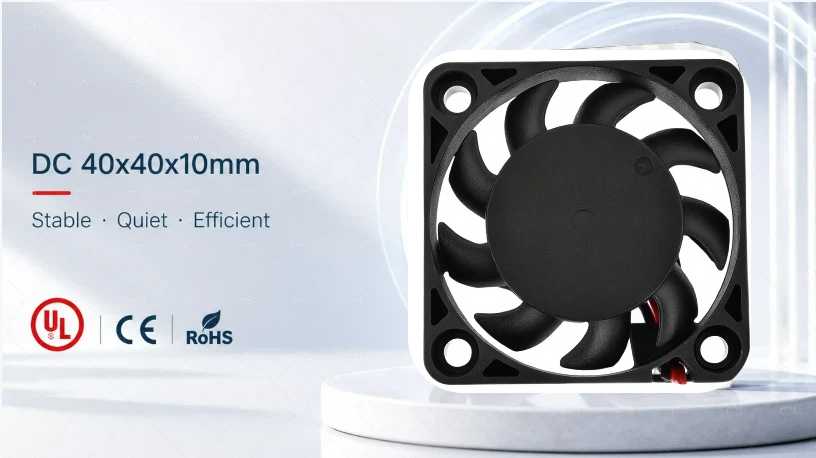
Yes, depending on the system design. ADC Axial Fancan be suitable for compact ventilation and cooling applications where the airflow path has relatively manageable resistance. The actual suitability should be determined by the required airflow and static pressure.
Why does a fan become louder after installation?
Installation can introduce additional resistance, turbulence, vibration, and resonance. Ductwork, grilles, mounting panels, and enclosures can all change the acoustic behavior of a fan. This is why system level testing is important.
How can fan speed control reduce noise?
Reducing fan speed during periods of low ventilation demand can reduce aerodynamic noise and mechanical activity. Variable speed control allows the fan to increase output only when higher ventilation is required.
Are small blower fans useful for luxury HVAC equipment?
Small blower fans can be useful where space is limited and a more directed airflow path is required. Products such as ablower fan 5015or a3010 blower fanmay be considered for compact equipment, but the correct model must be selected according to airflow, pressure, dimensions, and operating conditions.
How should fan vibration be controlled?
Proper balancing, bearing selection, rigid but suitable structural support, vibration isolation, and accurate installation can reduce vibration transmission. The surrounding enclosure should also be evaluated because structural resonance can amplify mechanical vibration.
Can a ventilation fan be completely hidden?
Yes. Fans can be installed inside ceiling cavities, service compartments, equipment cabinets, bathroom ceiling systems, or remote mechanical spaces. However, sufficient airflow clearance and maintenance access must still be provided.
How does ductwork affect exhaust fan noise?
Duct size, air velocity, elbows, transitions, filters, dampers, and grilles affect system resistance and turbulence. Poor duct design can force the fan to operate at higher speed and can generate additional aerodynamic noise.
Why is variable speed ventilation useful in luxury buildings?
Variable speed ventilation allows the system to respond to actual demand. It can provide lower background ventilation during normal conditions and increase airflow when humidity, occupancy, or air quality conditions require additional ventilation.
What should architects consider when integrating a quiet fan?
Architects should consider fan dimensions, installation location, access for maintenance, airflow openings, grille appearance, vibration transmission, duct routing, acoustic requirements, and coordination with ceilings and interior finishes.
Why should fan manufacturers participate early in a project?
Early cooperation allows the fan to be selected according to actual airflow, pressure, space, voltage, control, acoustic, and maintenance requirements. This can reduce the risk of redesign and improve integration between the HVAC system and architectural design.
What role can China Chungfo Fan play in luxury HVAC projects?
China Chungfo Fan can provide fan solutions based on application requirements, including airflow, pressure, voltage, dimensions, speed, noise, control, and installation conditions. For specialized projects, customized fan development can help bridge the gap between standard products and specific architectural HVAC requirements.