Kategori
Blog baru.
Memahami Teknologi Bantalan Lengan
July 13 , 2026Bantalan lengan merupakan salah satu desain bantalan tertua dan paling banyak digunakan dalam industri kipas pendingin. Popularitasnya berasal dari kombinasi konstruksi sederhana, kinerja yang andal dalam kondisi operasi sedang, dan biaya produksi yang kompetitif.
Di dalam kipas dengan bantalan lengan, poros motor berputar di dalam selongsong silinder yang dikerjakan secara presisi dan terbuat dari bahan logam berpori. Selama proses manufaktur, selongsong ini diresapi dengan minyak pelumas. Saat kipas mulai berputar, lapisan tipis pelumas terbentuk di antara poros dan permukaan bantalan, sehingga mengurangi kontak langsung logam dengan logam.
Karena melibatkan relatif sedikit komponen, kipas dengan bantalan lengan ekonomis untuk diproduksi sekaligus tetap memberikan operasi yang halus selama tahap awal masa pakainya. Kipas ini sering dipilih untuk produk yang mengutamakan keterjangkauan dan desain ringkas.
Banyak peralatan rumah tangga, perlengkapan kantor, elektronik pendidikan, sistem pencahayaan LED, perangkat hiburan, dan aplikasi kipas ringkas 5 volt masih mengandalkan teknologi bantalan lengan karena produk-produk ini biasanya beroperasi pada suhu sedang dan siklus kerja yang tidak terus-menerus. Dalam lingkungan seperti itu, bantalan lengan dapat memberikan kinerja pendinginan yang andal sambil menjaga biaya produksi tetap terkendali.
Keunggulan lainnya adalah pengoperasiannya yang relatif senyap saat masih baru. Minyak pelumas menyerap getaran kecil yang dihasilkan selama rotasi, sehingga banyak kipas dengan bantalan lengan dapat mencapai tingkat kebisingan awal yang rendahtingkat. Karakteristik ini membuatnya menarik untuk produk yang dirancang bagi lingkungan dalam ruangan di mana kenyamanan akustik menjadi hal penting.
Namun, kinerja bantalan lengan sangat bergantung pada terjaganya pelumasan yang cukup sepanjang masa operasinya. Seiring waktu, suhu yang meningkat secara bertahap mempercepat penguapan dan oksidasi pelumas. Ketika lapisan minyak menjadi lebih tipis, gesekan meningkat, yang akhirnya menyebabkan tingkat kebisingan lebih tinggi, peningkatan getaran, dan masa pakai yang lebih pendek.
Proses penuaan bertahap ini menjelaskan mengapa banyak perangkat elektronik menjadi lebih berisik setelah beberapa tahun beroperasi secara terus-menerus. Dalam banyak kasus, motor itu sendiri masih berfungsi, sementara bantalan hanya telah mencapai akhir siklus pelumasan efektifnya.
Untuk aplikasi yang memerlukan pengoperasian sesekali atau jam kerja harian yang terbatas, bantalan lengan tetap memberikan nilai yang sangat baik. Namun demikian, industri yang membutuhkan keandalan jangka panjang dalam operasi terus-menerus semakin mulai mengeksplorasi teknologi bantalan yang lebih canggih, yang mendorong penggunaan luas desain bantalan hidrolik dan solusi Kipas Tanpa Sikat modern.
Untuk memahami mengapa bantalan hidrolik semakin populer dalam sistem pendinginan modern, penting untuk terlebih dahulu mengenali keterbatasan utama bantalan lengan tradisional. Meskipun bantalan lengan dapat bekerja dengan baik dalam kondisi sedang, sistem pelumasannya sebagian besar bersifat pasif. Pelumas yang tersimpan di dalam bantalan secara bertahap berkurang seiring waktu akibat panas, penguapan, dan operasi jangka panjang. Saat pelumasan menurun, gesekan meningkat, dan kinerja kipas secara keseluruhan mulai menurun.
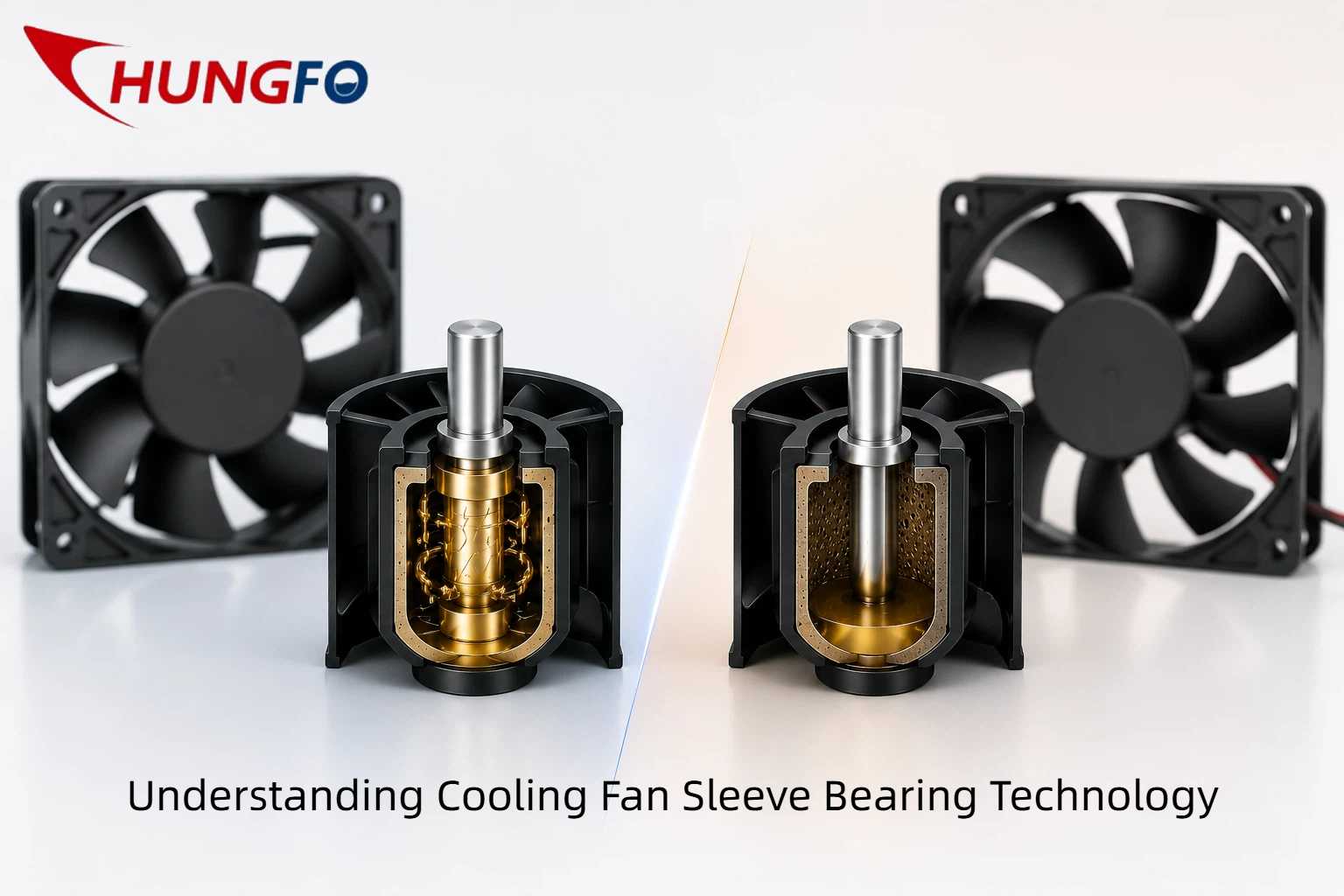
Teknologi bantalan hidrolik dikembangkan secara khusus untuk mengatasi tantangan ini.
Sekilas, bantalan hidrolik mungkin terlihat sangat mirip dengan bantalan lengan. Keduanya menggunakan minyak pelumas dan keduanya menopang poros yang berputar di dalam struktur silinder. Namun, rekayasa internalnya sangat berbeda.
Bantalan hidrolik memiliki alur minyak dan saluran sirkulasi yang dirancang khusus di dalam rakitan bantalan. Saat poros motor berputar, alur-alur ini menghasilkan tekanan dinamis yang terus mendistribusikan kembali pelumas ke seluruh permukaan bantalan. Alih-alih membiarkan minyak tetap diam, sistem hidrolik secara aktif mempertahankan lapisan pelumas yang stabil di sekitar poros selama operasi.
Sirkulasi berkelanjutan ini membantu mengurangi kontak langsung antara komponen logam yang bergerak dan meminimalkan keausan selama periode operasi yang panjang.
Hasilnya adalah sistem bantalan yang mampu mempertahankan kinerja stabil bahkan setelah ribuan jam operasi. Inilah salah satu alasan mengapa bantalan hidrolik semakin banyak ditemukan pada produk Kipas DC berkualitas tinggi yang digunakan dalam lingkungan industri yang menuntut.
Prinsipnya mungkin terdengar sederhana, tetapi dampak jangka panjangnya terhadap keandalan sangat besar.
Karena pelumasan tetap tersebar lebih merata, bantalan hidrolik mengalami lebih sedikit gesekan, menghasilkan panas lebih rendah, dan mengalami penurunan kinerja yang lebih lambat. Banyak produsen melaporkan masa pakai yang jauh lebih panjang dibandingkan desain bantalan lengan yang sebanding dan beroperasi dalam kondisi serupa.
Untuk peralatan yang diharapkan berjalan terus-menerus sepanjang tahun, perbedaan ini dapat menghasilkan penghematan besar dalam biaya pemeliharaan dan penggantian.
Performa Kebisingan Seiring Waktu
Salah satu perbedaan paling terlihat antara bantalan hidrolik dan bantalan lengan muncul setelah operasi yang lama.
Ketika kedua jenis kipas masih benar-benar baru, perbedaan tingkat kebisingan mungkin relatif kecil. Dalam beberapa kasus, pengguna mungkin tidak menyadari perbedaan apa pun selama beberapa bulan pertama penggunaan.
Situasinya berubah ketika jam operasi terus bertambah.
Saat pelumas secara bertahap berkurang di dalam bantalan lengan, kestabilan rotasi menurun. Pergerakan kecil pada poros dapat menghasilkan getaran, yang kemudian berpindah ke rangka kipas dan peralatan di sekitarnya. Hasilnya sering berupa peningkatan suara dengungan, bunyi bergetar, atau kebisingan mekanis.
Bantalan hidrolik dirancang khusus untuk mengurangi efek ini. Karena lapisan minyak tetap lebih stabil, pergerakan poros diminimalkan dan tingkat getaran tetap lebih rendah dalam jangka waktu yang lebih lama.
Karakteristik ini sangat berharga dalam lingkungan yang memprioritaskan pengurangan kebisingan.
Peralatan medis, elektronik kantor, perangkat rumah pintar, sistem pemantauan keamanan, dan produk konsumen kelas atas sering memerlukan operasi senyap sepanjang seluruh masa pakainya. Dalam aplikasi ini, mempertahankan tingkat kebisingan rendah dapat sama pentingnya dengan mempertahankan aliran udara.
Meningkatnya popularitas pasar Kipas Tanpa Sikatjuga telah meningkatkan permintaan terhadap teknologi bantalan canggih. Motor tanpa sikat modern sudah menghilangkan gesekan dan keausan yang berkaitan dengan sikat. Ketika digabungkan dengan bantalan hidrolik, hasilnya adalah solusi pendinginan yang sangat senyap dan mampu mempertahankan kinerja akustik yang stabil selama bertahun-tahun.
Ketahanan Suhu dan Kemampuan Beradaptasi terhadap Lingkungan
Panas adalah salah satu tantangan terbesar yang dihadapi oleh setiap kipas pendingin.
Ironisnya, kipas pendingin sering dipasang di lingkungan yang sangat panas. Kabinet kontrol industri, catu daya, sistem baterai, peralatan komunikasi, dan stasiun pengisian daya semuanya dapat menghasilkan suhu internal yang tinggi.
Dalam kondisi seperti ini, kinerja bantalan menjadi sangat penting.
Saat suhu meningkat, pelumas secara alami menjadi lebih encer dan menguap lebih cepat. Bantalan lengan tradisional lebih rentan terhadap proses ini karena sistem pelumasannya bergantung pada minyak yang tetap tersimpan di dalam material bantalan.
Bantalan hidrolik menawarkan keunggulan signifikan karena sistem pelumasan dinamisnya terus mendistribusikan kembali minyak selama operasi. Hal ini membantu mempertahankan lapisan pelumas yang lebih konsisten bahkan ketika suhu berfluktuasi.
Akibatnya, kipas dengan bantalan hidrolik sering menunjukkan stabilitas yang lebih baik di lingkungan bersuhu tinggi dan lebih kecil kemungkinannya mengalami penurunan kinerja sebelum waktunya.
Keunggulan ini menjadi semakin penting karena perangkat elektronik terus menjadi lebih ringkas sekaligus menghasilkan lebih banyak panas.
Perangkat keras kecerdasan buatan, sistem komputasi tepi, peralatan penyimpanan energi, dan infrastruktur pengisian EV semuanya memerlukan solusi manajemen termal yang andal dan mampu beroperasi dalam kondisi lingkungan yang menantang. Oleh karena itu, banyak produsen lebih memilih kipas bantalan hidraulik saat merancang produk yang ditujukan untuk masa pakai panjang dan pengoperasian berkelanjutan.
Orientasi Pemasangan dan Keandalan
Faktor lain yang sering diabaikan saat memilih kipas adalah orientasi pemasangan.
Tidak semua kipas pendingin beroperasi dalam posisi fisik yang sama. Beberapa dipasang secara vertikal, lainnya secara horizontal, dan banyak sistem industri memerlukan kipas untuk beroperasi pada berbagai sudut tergantung pada desain peralatan.
Bantalan selongsong tradisional umumnya bekerja paling baik saat dipasang secara vertikal. Pada pemasangan horizontal, gravitasi secara bertahap dapat memengaruhi distribusi pelumas di dalam bantalan. Dalam jangka waktu lama, pelumasan yang tidak merata dapat mempercepat keausan dan mengurangi masa pakai pengoperasian.
Bantalan hidraulik jauh lebih tidak sensitif terhadap orientasi pemasangan karena mekanisme sirkulasi oli internalnya membantu mempertahankan pelumasan terlepas dari posisi kipas.
Fleksibilitas ini memberi perancang peralatan kebebasan lebih besar saat mengembangkan sistem pendinginan untuk produk kompak dengan ruang pemasangan yang terbatas.
Sebagai contoh, peralatan komunikasi modern, pengendali industri tertanam, dan perangkat elektronik kompak sering kali memerlukan konfigurasi pemasangan yang tidak konvensional. Dalam situasi ini, teknologi bantalan hidraulik memberikan lapisan keandalan tambahan yang dapat berkontribusi pada masa pakai produk secara keseluruhan yang lebih panjang.
Kemampuan untuk mempertahankan kinerja yang konsisten pada berbagai orientasi pemasangan merupakan salah satu alasan mengapa bantalan hidraulik semakin umum digunakan dalam solusi pendinginan canggih di berbagai industri global.
Pada bagian berikutnya, kita akan membandingkan perkiraan masa pakai aktual kipas bantalan hidraulik dan bantalan selongsong, mengkaji perdebatan biaya versus nilai, serta menjelaskan mengapa industri seperti pengisian EV, peralatan medis, sistem pendinginan, dan otomasi industri semakin memilih teknologi bantalan hidraulik meskipun harga pembelian awalnya lebih tinggi.
Perbandingan Masa Pakai dan Analisis Biaya Jangka Panjang
Saat memilih kipas pendingin, banyak pembeli secara alami berfokus pada harga pembelian. Meskipun biaya awal merupakan pertimbangan penting, insinyur berpengalaman sering mengevaluasi kipas berdasarkan total biaya kepemilikan, bukan hanya harga jualnya.
Pendekatan ini menjadi sangat penting terutama saat membandingkan bantalan hidraulik dengan bantalan selongsong.
Kipas dengan bantalan selongsong biasanya menawarkan harga pembelian yang lebih rendah karena struktur internalnya relatif sederhana dan biaya produksinya lebih rendah. Untuk produk yang hanya beroperasi beberapa jam setiap hari, ini dapat menjadi pilihan yang sangat baik. Peralatan rumah tangga, peralatan pendidikan, aksesori desktop, dan banyak perangkat elektronik konsumen terus menggunakan kipas bantalan selongsong dengan sukses karena kondisi operasinya relatif ringan.
Namun, peralatan industri mengikuti pola yang sangat berbeda.
Sistem manufaktur, infrastruktur komunikasi, perangkat medis, peralatan pendinginan, dan otomasi komersial sering beroperasi dua puluh empat jam sehari, tujuh hari seminggu. Dalam lingkungan ini, bahkan satu kegagalan kipas dapat menyebabkan waktu henti produksi, pemeliharaan lapangan, biaya tenaga kerja penggantian, biaya transportasi, dan dukungan pelanggan.
Biaya sebenarnya untuk mengganti kipas yang rusak sering kali melebihi perbedaan biaya antara dua teknologi bantalan.
Bantalan hidraulik dikembangkan untuk mengurangi risiko jangka panjang ini. Sistem pelumasan dinamisnya memperlambat keausan internal, sehingga kipas dapat mempertahankan kinerja rotasi yang stabil dalam periode yang jauh lebih lama. Alih-alih hanya berfokus pada berapa lama kipas dapat beroperasi, insinyur juga mempertimbangkan seberapa konsisten kinerjanya sepanjang seluruh masa pakai.
Kipas pendingin yang terus menghasilkan aliran udara stabil setelah bertahun-tahun beroperasi secara berkelanjutan berkontribusi langsung terhadap keandalan seluruh sistem elektronik.
Karena alasan ini, banyak produsen peralatan kini mengevaluasi teknologi bantalan sebagai bagian dari strategi kualitas produk secara keseluruhan, bukan memperlakukannya sebagai sekadar pemilihan komponen.
Aplikasi Mana yang Paling Mendapatkan Manfaat dari Bantalan Hidraulik?
Berbagai industri memiliki kebutuhan pendinginan yang berbeda, dan tidak ada satu teknologi bantalan yang ideal untuk setiap situasi. Pilihan terbaik bergantung pada suhu operasi, perkiraan masa pakai, kemudahan akses pemeliharaan, dan nilai produk secara keseluruhan.
Kipas bantalan hidraulik sangat cocok untuk aplikasi yang mengutamakan keandalan.
Peralatan otomasi industri adalah salah satu contohnya. Jalur produksi sering beroperasi secara terus-menerus dengan waktu henti minimal. Pendinginan yang stabil melindungi penggerak motor, pengendali PLC, inverter, dan catu daya dari suhu berlebih. Kipas Pendingin DC yang andal membantu mempertahankan efisiensi produksi sekaligus mengurangi pemeliharaan tak terduga.
Peralatan medis merupakan aplikasi penting lainnya. Instrumen diagnostik, penganalisis laboratorium, sistem pencitraan, dan perangkat pemantauan pasien memerlukan kinerja pendinginan yang konsisten karena panas berlebih dapat memengaruhi akurasi pengukuran atau stabilitas peralatan. Rumah sakit juga lebih menyukai peralatan yang senyap, sehingga kipas bantalan hidraulik dengan tingkat kebisingan rendah menjadi sangat menarik.
Infrastruktur komunikasi memberikan tuntutan serupa pada sistem pendinginan. Stasiun pangkalan, kabinet jaringan, peralatan serat optik, dan ruang server menghasilkan panas yang signifikan sepanjang waktu. Dalam instalasi ini, mengganti kipas pendingin yang rusak dapat menyebabkan gangguan layanan dan pemeliharaan lapangan yang mahal. Bantalan hidraulik berumur panjang membantu mengurangi risiko operasional ini.
Pertumbuhan pesat stasiun pengisian kendaraan listrik telah menciptakan pasar yang terus berkembang untuk teknologi pendinginan canggih. Pengisi daya cepat menghasilkan panas yang cukup besar selama pengoperasian berdaya tinggi, terutama di lingkungan luar ruangan yang terpapar variasi suhu musiman. Pendinginan yang andal secara langsung mendukungefisiensi pengisian dan umur panjang komponen elektronik.
Sistem pendinginan komersial juga mendapatkan manfaat dari teknologi bantalan hidraulik. Pendingin minuman, lemari pendingin pajangan, kabinet anggur, mesin penjual otomatis, dan peralatan penyimpanan dingin bergantung pada aliran udara berkelanjutan untuk mempertahankan suhu yang stabil. Karena sistem ini sering beroperasi setiap jam setiap hari, ketahanan bantalan menjadi pertimbangan desain yang penting.
Di Mana Bantalan Selongsong Tetap Menawarkan Nilai yang Sangat Baik
Meskipun bantalan hidraulik memberikan banyak keunggulan kinerja, bantalan selongsong tetap menjadi bagian penting dari pasar kipas pendingin saat ini.
Produk konsumen yang sensitif terhadap biaya sering kali tidak memerlukan masa operasi yang sangat panjang. Televisi, printer, pengatur meja, atau perangkat pendidikan mungkin hanya beroperasi beberapa jam setiap hari dalam kondisi lingkungan yang sedang.
Dalam aplikasi ini, kipas bantalan selongsong tetap menyediakan pendinginan yang andal sekaligus membantu produsen mempertahankan harga yang kompetitif.
Produk elektronik kompak yang ditenagai oleh konfigurasikipas 5 voltmerupakan contoh umum lainnya. Peralatan portabel, aksesori bertenaga USB, proyektor mini, perangkat jaringan kecil, dan papan pengembangan kompak sering memprioritaskan konsumsi daya rendah, ukuran ringkas, dan harga terjangkau.
Untuk produk dengan jadwal operasi yang tidak terus-menerus, teknologi bantalan selongsong tetap memberikan keseimbangan efektif antara kinerja dan biaya.
Alih-alih menganggap satu jenis bantalan selalu lebih unggul, insinyur profesional menyesuaikan teknologi bantalan dengan kebutuhan operasi sebenarnya dari setiap aplikasi.
Mengapa Motor Tanpa Sikat Telah Mengubah Industri Kipas Pendingin
Teknologi bantalan hanyalah salah satu bagian dari pengembangan kipas pendingin modern.
Selama satu dekade terakhir, teknologi motor tanpa sikat telah mengubah industri dengan meningkatkan efisiensi, mengurangi perawatan, dan memperpanjang masa pakai produk.
Motor bersikat tradisional mengandalkan kontak fisik antara sikat karbon dan komutator untuk mentransfer arus listrik. Seiring komponen-komponen ini mengalami keausan, gesekan meningkat, efisiensi menurun, dan perawatan pada akhirnya menjadi diperlukan.
Kipas Tanpa Sikat menghilangkan keterbatasan ini dengan mengganti komutasi mekanis menggunakan kontrol elektronik. Tanpa keausan sikat karbon, motor tanpa sikat beroperasi lebih efisien sekaligus menghasilkan lebih sedikit panas dan secara signifikan meningkatkan keandalan jangka panjang.
Ketika motor tanpa sikat dikombinasikan dengan bantalan hidraulik, keunggulan keduanya saling melengkapi dengan sangat baik.
Motor tanpa sikat mengurangi keausan listrik dan mekanis di dalam motor itu sendiri, sementara bantalan hidraulik meminimalkan gesekan di sekitar poros yang berputar. Bersama-sama, teknologi ini menciptakan kipas pendingin yang mampu mempertahankan aliran udara yang stabil, getaran rendah, pengoperasian yang senyap, dan kinerja yang andal selama periode penggunaan yang panjang.
Karena alasan ini, sebagian besar solusi pendinginan industri premium saat ini menggunakan teknologi motor tanpa sikat dan desain bantalan hidraulik.
Meningkatnya permintaan untuk perangkat keras kecerdasan buatan, sistem energi terbarukan, robotika industri, manufaktur pintar, dan peralatan komunikasi canggih terus mempercepat adopsi solusi pendinginan berkinerja tinggi ini di seluruh dunia.
Pada bagian akhir, kami akan memperkenalkan bagaimana Chungfo Fan menerapkan manufaktur canggih, pengujian, dan kontrol kualitas untuk menghasilkan kipas pendingin yang andal, sekaligus memberikan panduan praktis dalam memilih teknologi bantalan yang tepat untuk berbagai proyek serta menjawab beberapa pertanyaan yang paling sering diajukan oleh para insinyur dan pembeli.