
Kategori
Blog baru.
Bagaimana pabrik China Chungfo Fan factory mengatasi titik masalah aliran udara di ruang uji iklim melalui konfigurasi ulang bilah berisik rendah
June 24 , 20261 Perubahan Iklim Global dan Gelombang Teknologi Internasional Terbaru dari Pendinginan Simulasi Industri
Pada forum teknis bersama Program Lingkungan Perserikatan Bangsa-Bangsa (UNEP) dan Organisasi Meteorologi Dunia (WMO) yang diadakan di Jenewa, Swiss, pada Juni 2026, para ilmuwan global dan pemimpin manufaktur industri mencapai konsensus tingkat tinggi: dengan normalisasi anomali iklim global, ketahanan lingkungan dari berbagai peralatan industri yang sangat canggih, penyimpanan inti energi baru, dan instrumen pengujian penelitian ilmiah menghadapi pengujian yang belum pernah terjadi sebelumnya. Pedoman tindakan terbaru yang diadopsi dalam pertemuan tersebut dengan jelas menunjukkan bahwa produk industri masa depan harus mempertahankan stabilitas operasional absolut di bawah kondisi kerja yang keras seperti suhu sangat tinggi, kelembapan sangat tinggi, dan fluktuasi tekanan atmosfer yang parah, yang secara langsung memicu gelombang peningkatan eksplosif dalam teknologi simulasi lingkungan dan peralatan deteksi di seluruh dunia.
Dalam transformasi teknologi yang berorientasi masa depan ini, arah teknologi Kipas untuk Ruang Uji Iklim, yang berfungsi sebagai sarana pengendalian suhu inti untuk berbagai peralatan simulasi lingkungan, telah menarik perhatian tinggi dari seluruh komunitas industri. Ruang uji lingkungan perlu secara akurat mensimulasikan iklim ekstrem mulai dari puluhan derajat Celsius di bawah nol hingga ratusan derajat Celsius dalam ruang tertutup yang sangat kecil dalam waktu singkat. Efisiensi aliran sirkulasi udara internal secara langsung menentukan keseragaman suhu dan akurasi pengendalian. Oleh karena itu, bagaimana mencapai kekuatan sirkulasi udara yang kuat di dalam interior peralatan kompleks dengan kepadatan tinggi dan hambatan tinggi, sambil mengendalikan kebisingan operasi dalam standar ilmiah yang sangat rendah, telah menjadi masalah rekayasa yang sangat kontradiktif yang dihadapi oleh semua produsen peralatan simulasi lingkungan.
Sebagai perusahaan manufaktur profesional yang telah bertahun-tahun mendalami bidang pendinginan industri, serta memiliki kekuatan R&D dan kustomisasi yang kuat, China Chungfo Fan factory selalu memberikan perhatian besar terhadap revolusi teknologi global ini. Kami sangat memahami bahwa ketika solusi pendinginan standar tradisional menghadapi tuntutan ketat peralatan modern yang sangat canggih, mereka sering kali terlihat kewalahan. Oleh karena itu, China Chungfo Fan factory berpegang pada pendekatan yang dimulai dari skenario aplikasi nyata pelanggan, dan terus menerobos hambatan kinerja komponen pendingin tradisional melalui komunikasi teknis yang mendalam serta rekayasa ulang aerodinamika tingkat dasar.
2 Komunikasi Mendalam dari Perspektif Pelanggan: Tuntutan Ekstrem Ganda dalam Ruang Kompak Berhambatan Tinggi
Dalam sebuah komunikasi proyek kustomisasi internasional yang sangat representatif yang baru-baru ini dihadapi oleh China Chungfo Fan factory, kami menyaksikan permintaan teknis pendinginan yang sangat menantang yang sepenuhnya berangkat dari perspektif desain keseluruhan mesin pelanggan. Pelanggan adalah perusahaan manufaktur riset ilmiah yang secara khusus menyediakan peralatan simulasi iklim mikro untuk laboratorium terkemuka di seluruh dunia. Pada pertemuan teknis tahap awal proyek, kepala insinyur R&D pelanggan menjelaskan secara rinci dilema besar yang mereka hadapi dalam desain struktur mesin secara keseluruhan.
Untuk mencapai efisiensi pengujian tertinggi dalam ruang desktop laboratorium yang terbatas, generasi baru ruang uji mikro yang dikembangkan pelanggan menumpuk komponen pemanas internal, evaporator pendingin, sensor presisi tinggi multi-saluran, dan rak uji sampel yang kompleks dalam tata letak yang sangat padat. Desain integrasi super tinggi ini menyebabkan saluran udara di dalam ruang uji menjadi sangat sempit dan berliku. Ketika udara bersirkulasi di dalamnya, ia menghadapi hambatan fisik yang sangat besar, yang dalam mekanika fluida disebut "hambatan tekanan statis tinggi".
Berdasarkan struktur mesin ini, pelanggan mengajukan indikator teknis yang jelas kepada China Chungfo Fan factory: karena pertukaran panas internal yang sangat intens, untuk memastikan kecepatan siklus suhu, kipas harus memiliki aliran udara besar dan tekanan statis yang sangat tinggi untuk benar-benar menembus tumpukan komponen yang berhambatan tinggi; namun pada saat yang sama, karena peralatan ditempatkan langsung di samping ruang bersih semikonduktor dan meja peneliti yang membutuhkan ketenangan ekstrem, pelanggan menetapkan batasan kebisingan akustik yang sangat ketat, yang mengharuskan nilai desibel kebisingan keseluruhan mesin harus lebih rendah dari suara latar belakang kantor konvensional saat beroperasi pada beban penuh.
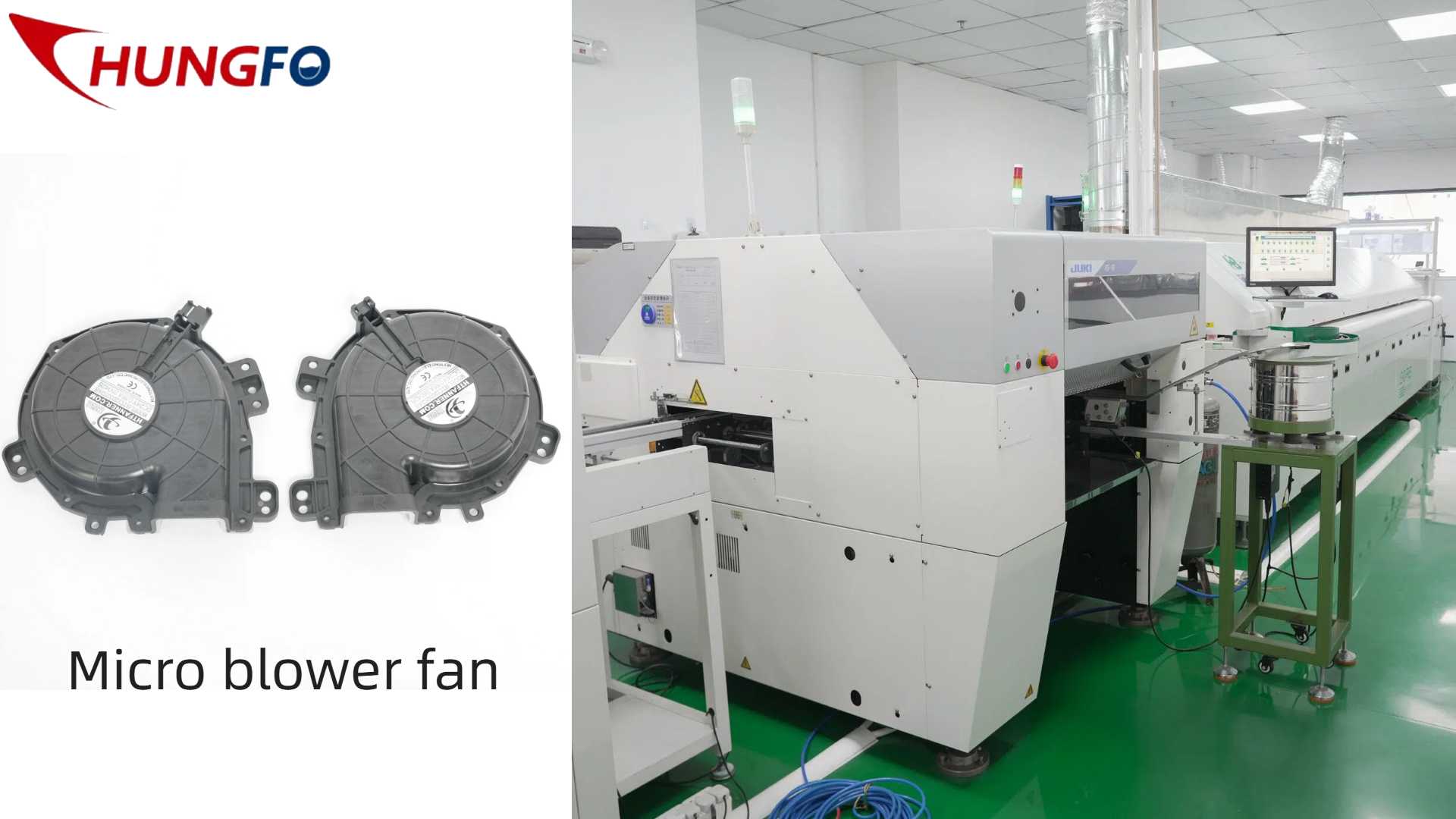
Selama komunikasi, pelanggan mengakui bahwa mereka sebelumnya telah mencoba kipas standar spesifikasi 12025 yang umum di pasaran. Meskipun parameter kipas 12025 di ruang terbuka menunjukkan bahwa aliran udaranya cukup, begitu dipasang ke dalam kotak kompak berhambatan tinggi seperti itu, karena sirkulasi balik udara yang parah dan pelepasan yang dihasilkan oleh bilah pada tekanan balik tinggi, standar 12025 fan tidak hanya mengalami penurunan aliran udara secara tiba-tiba, sehingga gagal memenuhi kebutuhan pertukaran panas, tetapi juga memicu dengungan frekuensi rendah yang sangat menusuk. Pelanggan mengatakan dengan sangat jelas bahwa mereka sama sekali tidak dapat menerima pengorbanan lingkungan tenang laboratorium demi aliran udara besar, maupun mengendurkan indikator pendinginan dan pengendalian suhu mesin untuk mengurangi kebisingan. Yang mereka butuhkan adalah solusi fisik yang disesuaikan yang secara sempurna mempertimbangkan aliran udara besar dan kebisingan rendah dari lapisan dasar tanpa mengubah ukuran pemasangan mikro 12025 yang sudah ada.
3 Solusi Terobosan dari China Chungfo Fan factory: Dari Penggantian Bilah hingga Rekayasa Ulang Aerodinamika Menyeluruh
Setelah sepenuhnya memahami titik masalah pelanggan dari perspektif struktur mesin secara keseluruhan dan skenario aplikasi berhambatan tinggi, tim rekayasa khusus China Chungfo Fan factory segera menolak pemikiran rutin untuk sekadar meningkatkan kecepatan putar atau merekomendasikan kipas berukuran lebih besar. Karena ruang pemasangan telah terkunci dalam kerangka mikro 12025, satu-satunya titik terobosan kami adalah melakukan desain ulang yang disruptif dan penggantian struktur bilah serta motor dari kipas 12025 untuk saluran aliran khusus dengan tekanan statis tinggi dan hambatan tinggi ini.
Untuk secara paksa meningkatkan aliran udara dan secara signifikan menekan kebisingan tanpa menambah dimensi luar kipas, pusat R&D China Chungfo Fan factory mengaktifkan sistem analisis medan aliran simulasi tiga dimensi Computational Fluid Dynamics (CFD) yang canggih. Kami pertama-tama memasukkan model saluran angin berliku di dalam ruang uji pelanggan ke dalam sistem dalam skala yang sama untuk mensimulasikan distribusi kecepatan aliran dan perubahan gradien tekanan gas secara nyata saat mengalir melalui celah sempit. Hasil simulasi dengan jelas menunjukkan bahwa bilah lurus pada kipas 12025 tradisional akan menghasilkan pelepasan pusaran yang parah di ujung bilah ketika menghadapi hambatan tinggi, yang merupakan penyebab utama penurunan aliran udara dan lonjakan kebisingan.
Setelah menemukan akar masalahnya, para insinyur kami memutuskan untuk sepenuhnya menyesuaikan dan mengganti bilah untuk pelanggan. Kami meninggalkan tipe bilah universal tradisional di pasaran dan mengembangkan bilah biomimetik melengkung dengan sudut sapuan khusus seperti sayap. Kelengkungan bilah jenis baru ini melalui perhitungan matematis yang presisi, dan desain sapuan ke belakang yang unik dapat mengarahkan gas untuk menyelesaikan konversi energi dengan cara yang lebih lembut dan halus saat melewati permukaan bilah, secara efektif mencegah pelepasan dini gas pada tekanan tinggi, serta mengurangi kebisingan geseran aliran udara hingga ke tingkat terendah dari sumbernya.
Tidak hanya itu, untuk memastikan bahwa gaya dorong udara yang cukup kuat tetap dapat dihasilkan dalam ruang yang sangat sempit, kami secara signifikan mengoptimalkan jumlah bilah dan sudut serang sisi angin selama proses penggantian bilah. Dengan meningkatkan ketebalan dan torsi pada akar bilah, kipas tidak hanya dapat menghasilkan volume fluida yang besar saat berputar, tetapi juga memberikan tekanan statis lebih dari tiga puluh persen lebih tinggi dibandingkan kipas biasa. Ini berarti kipas tidak lagi perlu mendapatkan aliran udara besar dengan menaikkan kecepatan motor secara berlebihan, sehingga resonansi mekanis, suara gesekan bantalan, dan kebisingan aerodinamis dapat dikunci pada tingkat yang sangat rendah secara fisik.
Pada tingkat kontrol penggerak, untuk mendukung solusi penggantian bilah yang sangat disesuaikan ini, China Chungfo Fan factory melengkapinya dengan sistem motor 24v fan yang efisien dan sangat rendah konsumsi energi. Sistem inti penggerak berbasis DC 24V ini tidak hanya memiliki kompatibilitas elektromagnetik yang sangat tinggi, tetapi juga mendukung fungsi pengaturan kecepatan cerdas Pulse Width Modulation (PWM) yang sangat presisi. Ini memungkinkan sistem kontrol ruang uji lingkungan pelanggan untuk menyesuaikan kecepatan putaran kipas secara dinamis dalam satuan sangat kecil per menit sesuai fluktuasi kecil suhu waktu nyata di dalam kotak, benar-benar mencapai kondisi ultra-hening pada tahap pemanasan harian, serta menunjukkan daya pendinginan yang sangat kuat pada tahap pemanasan dan pendinginan cepat, sehingga secara sempurna sesuai dengan pengejaran ganda pelanggan terhadap kontrol presisi tinggi dan lingkungan akustik yang nyaman.
4 Ekstensi Solusi Pendinginan Skala Besar dan Matriks Pembuangan Panas Industri Multi-Skenario
Komunikasi yang sukses dan kustomisasi mendalam dengan pelanggan peralatan simulasi lingkungan mikro tidak hanya menyelesaikan masalah pendinginan dan kebisingan yang mendesak bagi pelanggan, tetapi juga sekali lagi membuktikan keahlian teknis mendalam China Chungfo Fan factory dalam bidang aplikasi aerodinamika kompleks. Kami tidak puas dengan keberhasilan di bidang kipas mikro, tetapi secara logis mendorong dan memperluas konsep desain aerodinamika canggih ini dari penggantian bilah dan optimisasi aliran udara berhambatan tinggi ke lebih banyak skenario pembuangan panas industri berskala besar.
Didorong oleh transformasi hijau dan rendah karbon industri global saat ini, selain peralatan ilmiah mikro, bidang industri dengan ruang besar dan beban tinggi seperti klaster pengujian iklim multifaktor walk-in skala besar, ruang server pusat superkomputasi kecerdasan buatan modern, dan kontainer penyimpanan energi baru tingkat megawatt juga sedang mengalami transformasi dengan kepadatan daya tinggi dan kontrol lingkungan yang ketat. Dalam sistem industri besar ini, unit pendinginan mikro tidak lagi dapat memenuhi kebutuhan aktual pertukaran panas besar secara keseluruhan, dan harus mengandalkan kipas industri skala besar dengan volume lebih besar dan daya lebih kuat untuk melakukan pengaturan sirkulasi udara global.
Menargetkan ruang ultra-besar yang juga menghadapi hambatan udara tinggi dan bahaya kebisingan tinggi, China Chungfo Fan factory, dengan rantai R&D yang lengkap, berhasil mengembangkan kipas aksial 250mm yang sangat disruptif. Selama proses R&D kipas industri berukuran besar dan berkekuatan tinggi ini, kami menghadapi tantangan kebisingan akustik frekuensi rendah yang lebih mengerikan akibat pembesaran diameter kipas dan peningkatan drastis kecepatan linear ujung bilah.
Untuk menyediakan aliran udara yang sangat besar sambil mempertahankan tingkat kebisingan yang sangat rendah, tim teknik dari pabrik kipas China Chungfo Fan factory secara sempurna memperbesar dan menyempurnakan konsep desain bilah pengganti swept-wing yang telah kami verifikasi berulang kali pada kipas mikro kustom dalam proporsi yang sama. Kami bekerja sama dengan Institut Ilmu Material untuk menggunakan material komposit serat karbon diperkuat berkekuatan tinggi guna melakukan pencetakan kompresi presisi terintegrasi penuh pada bilah kipas aksial berukuran besar ini. Kombinasi material dan jenis bilah khusus ini memungkinkan kipas berukuran besar tersebut beroperasi pada kecepatan penuh dan menghasilkan ribuan meter kubik aliran udara kuat per jam, sementara bilahnya tidak hanya memiliki kekakuan yang sangat tinggi dan tidak pernah mengalami deformasi fisik serta getaran mikro, tetapi turbulensi udara dan kebisingan pusaran yang dihasilkannya juga sangat dikurangi.
Berdasarkan akumulasi teknis dari skala mikro hingga makro yang tidak pernah berhenti ini, baik itu kipas 24v yang efisien yang digunakan di dalam instrumen eksperimen mikro presisi dan mendukung pengaturan kecepatan halus yang cerdas, atau sebuahkipas aksial 250mmyang diterapkan di pusat energi industri berskala besar dan mampu mencapai pertukaran panas berskala besar yang kuat, pabrik kipas China Chungfo Fan factory selalu berpegang pada menjadikan titik masalah aktual pelanggan sebagai koordinat inti. Dengan secara teliti membentuk kelengkungan spasial setiap bilah pada tingkat mikron dan terus-menerus melampaui batas aerodinamika, kami telah berhasil mengubah "ketidakcocokan" antara aliran udara besar dan kebisingan rendah dalam persepsi tradisional komunitas industri menjadi solusi nyata yang dapat hidup berdampingan secara sempurna dalam berbagai kondisi kerja ekstrem, terus berkontribusi pada kekuatan teknologi pembuangan panas yang kokoh dan mengalir deras untuk peningkatan hijau berkualitas tinggi industri global.